
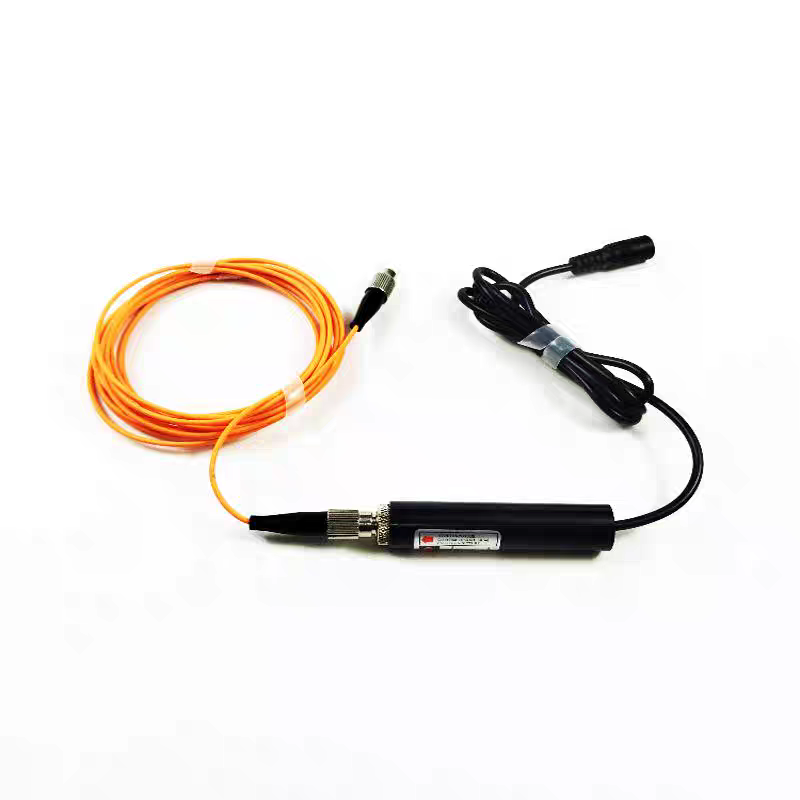
Optical communication systems often face interference from reflected light—and the consequences are far from trivial. For example, reflected light can disrupt laser stability, creating reflection noise, or modify the gain of optical amplifiers, introducing unwanted noise into the system. In such scenarios, an optical isolator (also referred to as a unidirectional coupler) becomes a necessity. This non-reciprocal passive optical component enables the forward transmission of optical signals while suppressing reverse light, making the optical path irreversible.
1. The Indispensable Role of Optical Isolators
Optical isolators are critical, non-negotiable components in two key systems: fiber optic communication systems and fiber optic CCTV systems. Their core functions include:
- Eliminating the adverse effects of end-face reflections and back reflections from optical elements;
- Stabilizing the operating characteristics of semiconductor laser sources, thereby ensuring overall system stability;
- Serving as key components in erbium-doped fiber amplifiers (EDFAs): they suppress reverse transmission, improve gain, and reduce noise figures.
2. Types of Optical Isolators
Optical isolators are primarily categorized into two types based on their interaction with light polarization:
- Polarization-Dependent Isolators: Regardless of the input polarization state, these isolators output linearly polarized light. A key characteristic is that they alter the polarization of the input light.
- Polarization-Independent Isolators: These isolators have minimal dependence on the input polarization state, making them suitable for scenarios where input polarization varies.
3. Structure and Operating Principle of Optical Isolators
The basic structure of an optical isolator consists of three main parts: a polarizer, a detector, and a Faraday rotator (positioned between the polarizer and detector). Both the polarizer and detector function essentially as polarizing filters. Here’s a detailed breakdown of how it works:
- Incident light first passes through the polarizer, converting into linearly polarized light.
- This linearly polarized light then travels through the Faraday rotator, which rotates its polarization direction by 45°.
- The rotated light aligns perfectly with the orientation of the second polarizer (detector), allowing it to pass through smoothly and enter the output fiber.
When reverse (reflected) light occurs:
- Reflected light passes through the second polarizer and re-enters the Faraday rotator.
- The Faraday rotator rotates the reflected light’s polarization by an additional 45° in the same original direction (a unique property of non-reciprocal components).
- By the time the reflected light reaches the first polarizer, its polarization direction is 90° out of phase with the polarizer’s orientation.
- As a result, the reflected light cannot pass through the first polarizer and is effectively blocked.
This process is the fundamental operating principle that allows optical isolators to protect optical systems from reverse light interference.
4. In-Line vs. Built-In Optical Isolators: Key Differences
In-Line optical isolators and Built-In optical isolators share the same core performance metrics (with a focus on isolation, insertion loss, and operating wavelength). However, their parameter ranges differ slightly based on their intended application scenarios.
Common Core Parameters (for Both Types)
- Isolation: The ability to suppress reverse light. Typically, a minimum of ≥30dB is required (higher values are better, as they more effectively prevent reverse light from disrupting light source stability).
- Insertion Loss: The power loss that occurs during forward light transmission. Generally, a maximum of ≤0.5dB is required (lower values are preferred to minimize signal attenuation).
- Operating Wavelength: Must match the wavelength of the system’s optical signal. For example:
- 1310nm/1550nm for optical communication systems;
- 980nm for pump sources.
Distinct Parameters (By Type)
- Package Dimensions:
- In-Line modules: Usually follow standard sizes (e.g., 10×20×5mm);
- Built-In modules: Feature smaller dimensions (e.g., 5×10×3mm) to meet device integration requirements.
- Environmental Adaptability:
- Built-In modules: Must align with the device’s overall requirements for temperature, humidity, and shock resistance (e.g., industrial-grade modules support -40~85°C);
- In-Line modules: Typically meet commercial-grade standards (0~70°C), though customization is available for special scenarios.
5. Core Selection Recommendations
Choosing between In-Line and Built-In optical isolators depends on your specific application needs:
- Prioritize In-Line Optical Isolators if:
- You need flexible adaptation to diverse optical links;
- Future system upgrades or maintenance replacements are anticipated (e.g., setting up lab optical paths, adding isolation to existing systems).
- Prioritize Built-In Optical Isolators if:
- You are designing mass-produced equipment (e.g., custom lasers, optical modules);
- Size and cost control are critical, and isolation needs are fixed.
6. Customization Support
Beyond the standard In-Line and Built-In optical isolators outlined above, we understand that many applications have unique requirements that may not be fully met by off-the-shelf products. Therefore, we offer customization services tailored to our clients’ specific needs. Whether you require adjusted isolation levels, non-standard operating wavelengths, specialized package dimensions for tight integration spaces, or enhanced environmental adaptability (such as extended temperature ranges for extreme industrial environments), our team can work with you to develop optical isolators that align perfectly with your system’s requirements.