
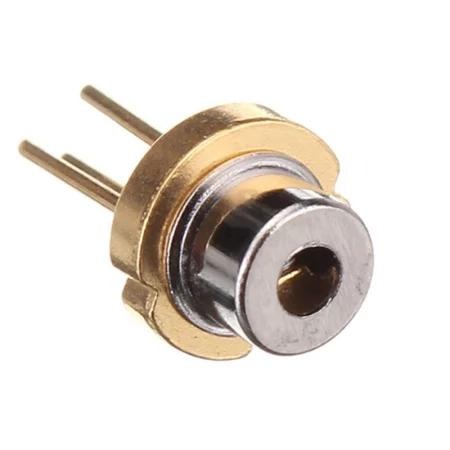
If you’ve ever dabbled in optoelectronic devices—especially those connected to optical fibers—you’ve probably mixed up LDs (laser diodes) and PDs (photodiodes) at some point. They look similar in setups, and their roles can feel vague at first glance. But here’s the quick, no-jargon takeaway: Laser Diodes (LDs) emit light, while Photodiodes (PDs) receive light.
When paired with optical fibers, these two components work in perfect harmony, each with a clear job. Together, they power everything from your home fiber internet to industrial laser cutting and even medical treatments. Below, we’ll break down their core differences, how they interact with optical fibers, and their real-world uses—all in simple terms, no prior expertise required.
First: The Basics – LD, PD, and Optical Fibers Explained
Before diving into their fiber-optic applications, let’s get clear on what each component does. Think of them as a team—each has a non-negotiable role:
1. Laser Diode (LD): The “Light Signal Transmitter”
The LD’s sole job is to emit laser light. When an electric current flows through it, it produces a bright, highly focused laser beam (one that’s “coherent,” meaning all the light waves move in sync). When connected to an optical fiber, the LD precisely injects this laser into the fiber’s core—kicking off long-distance transmission or targeted tasks (like cutting metal).
2. Photodiode (PD): The “Light Signal Receiver”
Unlike the LD, the PDnever emits light. Its superpower is converting light into electricity. When laser light (sent through an optical fiber) hits the PD’s surface, it turns that light signal into an electrical signal—one that devices (like your router or industrial machines) can process and understand.
3. Optical Fiber: The “Light Conductor”
Think of optical fiber as a tiny, super-efficient “pipe” for light. It carries the laser emitted by the LD, minimizing signal loss so the light travels hundreds (or even thousands) of miles without fading. Together with LDs and PDs, it completes a closed loop: emission (LD) → transmission (fiber) → reception (PD).
A Simple Analogy to Remember
Still a little fuzzy? Here’s a relatable comparison:
- LD = A flashlight (it sends out light)
- Optical Fiber = A clear, flexible tube (it guides the flashlight’s light from one end to the other)
- PD = Your eye (it detects the light coming out of the tube and sends a signal to your brain to “understand” it)
That’s it! No complex formulas—just a simple “flashlight → tube → eye” team.
Key Topic: LD/PD + Fiber Optics – Real-World Applications
The magic happens when LDs and PDs are paired with optical fibers. Their “transmit-receive” division of labor powers dozens of everyday and industrial technologies. You don’t need to memorize specs—just focus on these common scenarios:
I. Laser Diode (LD) + Fiber Optics: What It Does
When an LD connects to an optical fiber, its job is totransmit laser light through the fiber—focusing on directional, long-distance, or high-power tasks. Here are the three most common uses:
1. Optical Communications (The Core Use Case)
This is where LDs shine (pun intended)! Think fiber broadband internet, data centers, and long-distance phone calls. Here’s how it works:
The LD converts electrical signals (like your streaming data or a phone call) into laser light. That laser travels through the optical fiber for miles—with almost no signal loss—until it reaches a PD at the other end. The PD then turns the light back into an electrical signal, so your device (laptop, phone) can use it. Without LD-fiber connections, high-speed fiber internet (the kind that lets you stream 4K video without buffering) wouldn’t exist.
Pro tip: LDs pair with two types of fiber, depending on distance:
- Single-mode fiber: For long-distance transmission (e.g., cross-country internet lines).
- Multi-mode fiber: For short-distance, high-power use (e.g., data centers).
2. Industrial Processing
If you’ve ever seen a laser cut a metal sheet or engrave a phone case, you’ve seen an LD + fiber in action. LDs emit high-power lasers, which are guided through optical fibers to the processing site. The fiber’s flexibility lets the laser reach complex angles (perfect for detailed engraving or welding), while minimizing energy loss—so the laser stays strong and precise. Many industrial machines use “LD-pumped fiber lasers” for high-power cutting and welding tasks.
3. Medical & Scientific Research
LDs + fiber optics are game-changers in healthcare and research:
- Medical: Laser therapy (for eye or skin conditions) uses LDs to emit targeted lasers, guided by fiber to precisely hit lesions—without damaging surrounding tissue. The fiber’s flexibility fits into complex medical equipment, making treatments safer.
- Research: In labs (e.g., nuclear fusion studies), LDs paired with “polarization-maintaining fibers” transmit high-speed data, supporting experiments that require precise, stable light signals.
Wrapping up: The next time you see an optical fiber setup, remember—if it’s sending light, it’s an LD; if it’s receiving it, it’s a PD. Together, they’re the unsung heroes of high-speed tech, industrial innovation, and modern healthcare.