
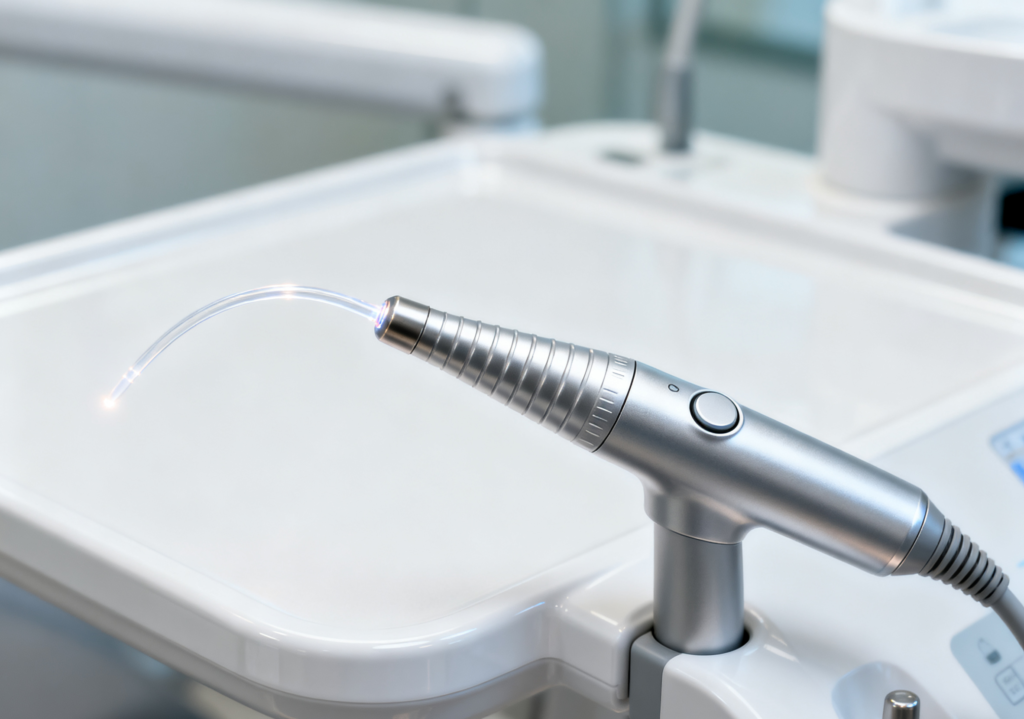
Oral laser therapy has redefined modern dentistry, standing out for its painless, minimally invasive nature—accompanied by minimal bleeding and rapid healing. Widely adopted in developed European and American nations, it is progressively supplanting traditional dental treatment methods, offering both clinicians and patients a more comfortable and effective alternative.
The Science Behind Oral Lasers
What makes oral lasers so transformative? Their unique physical properties are key:
- Core Characteristics: Excellent monochromaticity, coherence, and directionality allow for precise targeting of affected areas.
- Accessibility: Flexible, slender optical fibres enable easy navigation into hard-to-reach spaces like periodontal pockets and deep corners of the oral cavity.
- Therapeutic Effects: High-energy lasers seal oral capillaries while decomposing and denaturing bacteria, achieving triple benefits: anti-inflammation, haemostasis, and sterilisation.
- Controllability: Dental laser energy can be precisely adjusted within safe threshold ranges, ensuring optimal biological compatibility with oral tissues.
Common Applications of Dental Laser Therapy
Oral lasers are versatile tools, finding use across a wide spectrum of dental procedures. Here are their most prevalent applications:
1. Dental Hard Tissue Treatment
Lasers have revolutionised how we address hard tissue issues, with key uses including:
- Caries removal
- Dentin desensitisation
- Enamel pretreatment
Medical optical fibres deliver laser energy to target areas with pinpoint accuracy, effectively eliminating diseased tissue while sparing healthy dental structures. Unlike traditional mechanical drilling, laser treatment is vibration-free and noise-free—a game-changer for patients with dental anxiety or discomfort.
2. Periodontal Treatment
For managing periodontal disease, lasers offer a minimally invasive solution:
- They eliminate dental plaque, calculus, and infected tissue deep within periodontal pockets.
- The laser’s thermal and photochemical effects eradicate harmful bacteria and stimulate natural tissue regeneration.
Patients benefit from reduced bleeding, less postoperative pain, and faster healing compared to conventional scaling and root planing.
3. Oral Soft Tissue Surgery
From cosmetic adjustments to lesion treatment, lasers excel in soft tissue procedures:
- Gingivoplasty (gum reshaping for aesthetics or function)
- Frenectomy (correcting tongue-tie or lip-tie)
- Oral ulcer therapy
The precision of medical fibre-delivered lasers allows surgeons to cut or coagulate tissue with minimal intraoperative bleeding. Postoperatively, scarring is reduced, and the laser’s disinfectant properties lower infection risks.
4. Teeth Whitening
Laser teeth whitening is one of the most popular cosmetic dental procedures, thanks to:
- Rapid results: Specific wavelength lasers, delivered via medical fibres, activate peroxides in whitening agents to break down pigment molecules.
- Longevity: Compared to conventional methods, laser-assisted whitening yields more pronounced, longer-lasting brightness.
5. Root Canal Therapy
Lasers enhance the efficacy and comfort of root canal treatment:
- Medical fibres deliver laser energy deep into root canals, using photothermal effects to eliminate hidden bacteria and infected tissue.
- They also seal dentinal tubules, reducing the risk of reinfection.
Patients report less postoperative pain and fewer complications with laser-augmented root canals.
Medical Fibres for Oral Laser Therapy
The success of oral laser therapy hinges on choosing the right medical fibre. Fibre selection depends on laser wavelength, treatment goals, transmission characteristics, and equipment compatibility. Below is a breakdown of the most common types:
Classification by Laser Wavelength (Core Basis)
A laser’s wavelength dictates its tissue interaction (e.g., cutting, ablation, sterilisation), and the fibre material must match this wavelength to avoid energy loss.
1. Fibres for Near-Infrared Lasers
Near-infrared lasers (810nm, 980nm, 1064nm) are the workhorses of dentistry, ideal for soft tissue procedures, periodontal care, and implant maintenance. The primary fibre type here is:
- Quartz Fibre
- Characteristics: Made from high-purity quartz glass, it transmits near-infrared light with minimal loss. Its flexibility allows bending to fit intraoral angles.
- Specifications: Diameters range from 200μm to 600μm. Smaller diameters (200–300μm) create concentrated spots for precise work (e.g., periodontal pocket debridement); larger diameters (400–600μm) cover broader areas for extensive soft tissue excision.
- Applications: Compatible with diode lasers (810nm, 980nm) and Nd:YAG lasers (1064nm). Used for periodontal scaling, gingivoplasty, oral ulcer treatment, and peri-implantitis debridement.
2. Fibres for Mid-Infrared Lasers
Mid-infrared lasers (2780nm, 2940nm) penetrate tissue shallowly and target water (a key component of soft tissue), making them perfect for delicate surgery.
Quick Tips for Fibre Installation
Proper fibre installation ensures optimal laser performance. Follow these key steps:
- Clean the Fibre Tip: Wipe the tip with a lint-free cloth or alcohol pad to remove dust or debris—contamination reduces transmission efficiency.
- Secure the Fibre Tip: Attach the tip to the fibre according to the manufacturer’s instructions (e.g., twist-lock or snap-fit).
- Pre-Bend for Access: Gently bend the fibre to the angle needed for the procedure (avoid sharp bends, which cause energy loss) to reach target areas easily.
