
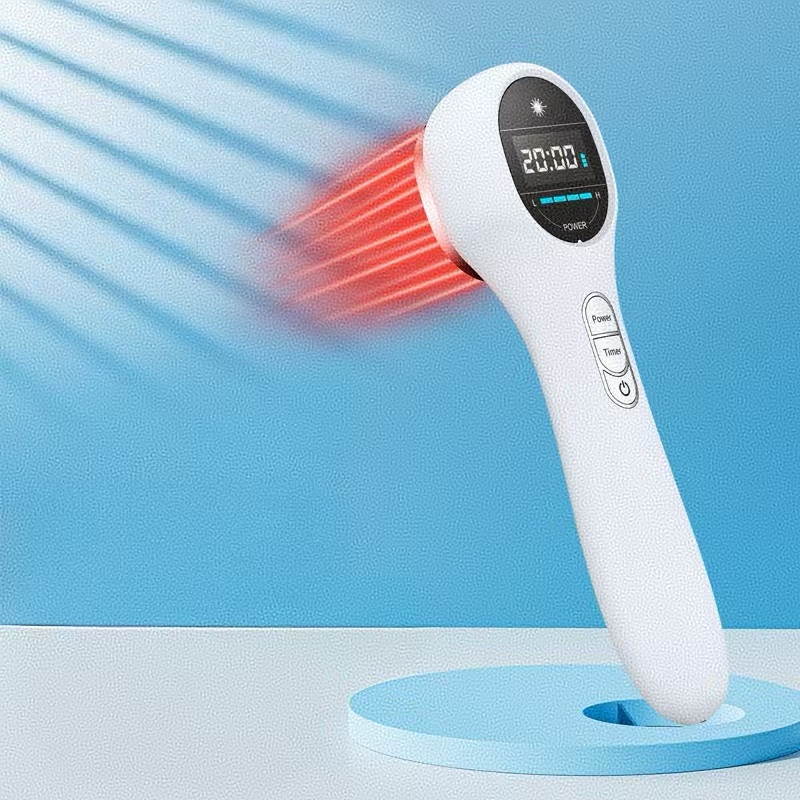
The therapeutic effects of semiconductor lasers are primarily manifested in effective pain management, rapid reduction of inflammation, and repair of damaged tissues. Lasers of different wavelengths vary in terms of penetration depth and biological effects. Short red wavelengths like 650 nm are readily absorbed by cell mitochondria to convert into cellular ATP, boosting cell metabolism and microcirculation. Longer near-infrared variants such as 808 nm penetrate deeper into human tissue to deliver energy straight to muscles and joints, delivering prominent anti-inflammatory, pain-relieving and deep tissue repairing benefits.
These laser therapies cover treatments for soft tissue injuries, arthritis, neuralgia and wound healing, and have expanded broadly into sports rehabilitation. For long near-infrared wavelengths like 980 nm, apart from deep tissue penetration, their energy is readily absorbed by water molecules to create thermal effects under high-power settings. Meanwhile, longer infrared lasers at 1064 nm feature outstanding penetration and tissue vaporization at high power, enabling precise minimally invasive surgeries including soft tissue cutting and coagulative hemostasis.
Full Breakdown: Therapeutic Functions by Laser Wavelength
1. 450 nm (Blue Light Band)
- Kills Propionibacterium acnes, used for acne therapy;
- Kills pathogenic bacteria on wounds to prevent secondary infections.
2. 650nm (Short-wavelength Red Light)
- Reduces local inflammatory responses and accelerates wound healing;
- Stimulates collagen synthesis and repairs skin soft tissue;
- Easily absorbed by cellular mitochondria to generate ATP, optimizing cellular metabolism and improving microcirculation.
3. 780nm (Near-Infrared)
- Targets neural tissue to assist in the repair and regeneration of nerve cells, suitable for therapeutic treatments of nerve damage.
4. 810nm (Near-infrared, with characteristics similar to 808nm deep infrared)
- Enhances the body’s ATP synthesis and replenishes cellular energy;
- Repairs deep connective tissues such as bones, cartilage, and fascia;
- Penetrates deep into soft tissues to provide deep anti-inflammatory and analgesic effects, commonly used for physical therapy targeting joint and muscle lesions.
5. 880nm (Near-infrared)
- Accelerates lactic acid metabolism and shortens post-exercise muscle recovery time;
- Improves muscle endurance and explosive power, commonly used for sports injury rehabilitation.
6. 915nm (Near-infrared)
- Enhances cellular oxygen-carrying capacity, promotes angiogenesis and muscle tissue growth, suitable for rehabilitation of muscle strain and circulatory disorders.
7. 940nm (Near-Infrared)
- Promotes nitric oxide release, dilates microvessels, accelerates local tissue blood circulation, and alleviates swelling and pain caused by congestion and poor circulation.
8. 980nm (Long-Wavelength Near-Infrared)
- Physical therapy applications: Block pain signal transmission for rapid pain relief;
- High-power applications: Deep penetration; energy is easily absorbed by water to produce a thermal effect, suitable for thermal therapy.
9. 1064nm (Long-wavelength infrared)
- Low-power physical therapy: Promotes the secretion of anti-inflammatory factors, alleviates persistent inflammation, and aids in the rehabilitation of neurological conditions;
- High-power medical applications: Excellent tissue penetration and vaporization capabilities, used for minimally invasive soft tissue cutting and coagulation hemostasis in surgery.
Final Summary of Wavelength Band Rules
- Short wavelengths (450/650 nm): Superficial action, focusing on skin wounds, acne, epidermal inflammation, and superficial collagen repair;
- Mid-to-near infrared (780–940 nm): Moderate penetration, primarily targeting nerves, muscles, fascia, joints, sports rehabilitation, and microcirculation regulation;
- Long-to-near infrared (980/1064 nm): Deep penetration, dual-purpose for therapeutic pain relief and high-power surgical procedures.